
A cultural scene under geopolitical constraint
The Francophonie Games extend far beyond the scope of an international sporting and cultural event.
Within the Francophone space, such formats do not operate solely as cultural celebrations. They also function as instruments for making states visible, revealing their organizational capacity and their symbolic positioning within the international system.
In Kinshasa, this logic becomes particularly evident, as the event unfolds within an environment marked by ongoing security and geopolitical tensions in the eastern part of the Democratic Republic of the Congo.
The event as an infrastructure of representation
Beyond artistic and sporting performances, the Games generate an infrastructure of collective representation.
They circulate through:
- images of institutional modernity
- narratives of national cohesion
- forms of international projection
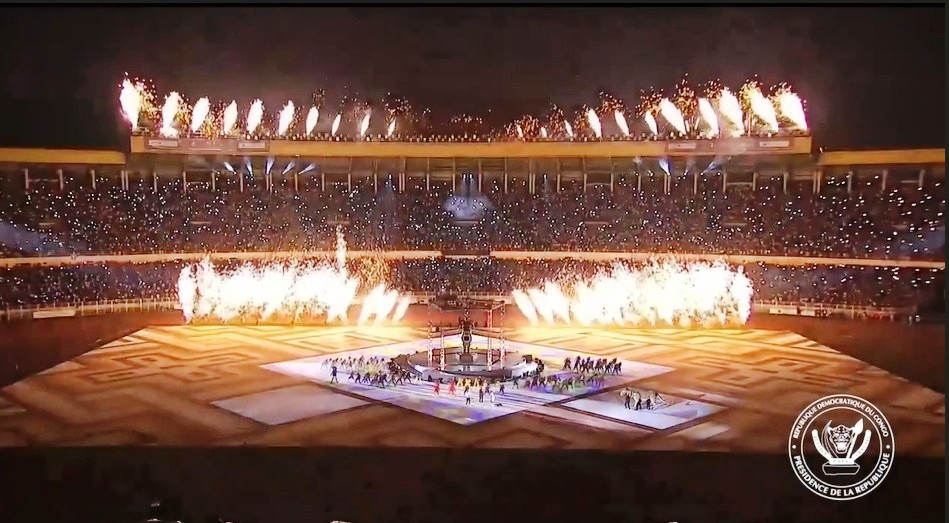
Stadiums, ceremonies, audiovisual devices and performances act as carriers of indirect political storytelling.
Culture here is no longer an autonomous expression, but a language of symbolic legitimation.
Kinshasa: between visibility and fragility
Hosting the Games in Kinshasa reveals a structural tension.
On one side, the event asserts organizational capacity, Francophone centrality and international visibility.
On the other, it remains embedded in an environment shaped by institutional fragilities and persistent security asymmetries.
This coexistence does not produce a simple contrast but a form of superposition:
the event becomes a space of negotiation between visibility and vulnerability.
Francophonie as a circulatory dispositif
The Games belong to a broader institutional ecosystem.
They structure circulation across:
- cultural diplomacy
- visibility of member states
- construction of a linguistic space
- symbolic hierarchies between center and periphery
Kinshasa appears less as a host city than as a temporary node within a constantly reconfigured Francophone space.
Culture and the global visibility economy
The event highlights a broader shift: culture increasingly operates as an instrument of strategic visibility.
Performances, ceremonies and media dispositifs participate in a global attention economy in which states compete to stabilize their symbolic position within a saturated landscape of narratives.
The Games thus produce not only culture, but also regimes of political and symbolic legibility.
A cultural scene as a way of reading the world
The Francophonie Games in Kinshasa cannot be reduced to a cultural event in the conventional sense.
They form an observational space where the relationships between culture, power and international representation become visible.
Within this configuration, culture functions neither as decoration nor as pure expression, but as an infrastructure of visibility in which symbolic hierarchies and recognition regimes are continuously renegotiated.
—
📝 Article originally published on the historical platform Ciel-Bleu.org, then editorially revised and harmonized for Ciel Bleu Kultur.