

Music plays a distinct role in contemporary intercultural processes. Unlike other forms of expression, it transcends linguistic boundaries while engaging with diverse cultural, historical and aesthetic logics.
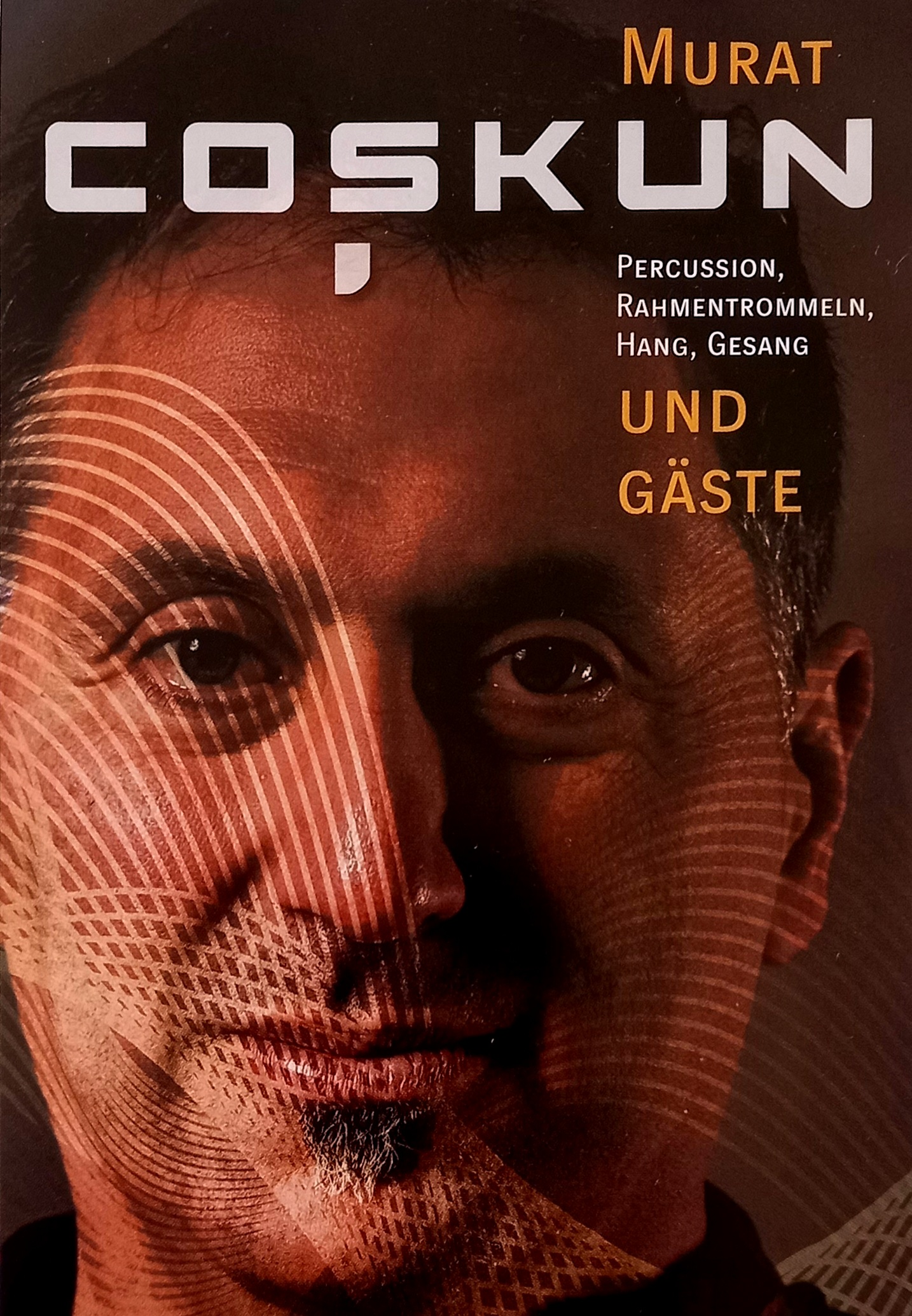
The concert held at the E-Werk Freiburg in honour of the Reinhold-Schneider Prize laureate, Murat Coşkun, illustrates this dynamic through a concrete practice of intercultural musical collaboration.
Music as a relational practice
The work of Murat Coşkun is based on relating musical traditions rather than simply combining styles.
The projects presented during the concert demonstrate an approach in which musical systems are not merged, but placed in dialogue while preserving their specificity.
This generates forms of interaction that go beyond performance and become processes of artistic negotiation.
Sound as a non-verbal communicative space
In intercultural musical practice, sound functions as an autonomous medium of communication.
It enables forms of understanding that are not mediated by language but by listening, resonance and mutual adjustment.
Cultural differences are not erased but integrated into the structure of the musical process.
The concert as a cultural dispositif
The concert at the E-Werk Freiburg is more than a performance.
It operates as a cultural dispositif in which different musical practices and production contexts intersect.
Ensembles such as Tales of Souls or the Coşkun Percussion Trio illustrate collaborative structures based on shared creative processes.
The participation of local cultural actors also highlights the importance of territorial embeddedness in intercultural projects.
Interculturality as embodied practice
The example of Murat Coşkun demonstrates that interculturality in music is not an abstract concept but a lived practice.
It emerges through cooperation, artistic negotiation and shared construction of musical forms.
Music thus becomes a space of active cultural relationship-building.
Conclusion
Intercultural music projects are not limited to encounters between styles or traditions.
They create spaces of meaning production in which cultural difference becomes a creative resource.
In this way, music contributes to contemporary forms of cultural mediation between artistic practice and social dialogue.
