

The university as a supposedly open space
In international higher education discourse, universities are often portrayed as naturally open environments where knowledge circulates freely, languages intersect, and students gradually adapt to new academic settings.
This narrative functions effectively within institutional communication. Everyday university realities, however, tend to be far more uneven.
In several Eastern European universities, particularly in Kyiv, student mobility generates more than academic integration. It produces continuous adjustments between languages, social habits, and different ways of occupying academic space.
These adjustments often remain barely visible. Yet they shape a significant part of the international student experience.
What mobility actually transforms
The arrival of international students alters universities in subtler ways than official narratives usually acknowledge.
The transformation is not primarily visible in enrollment statistics or exchange programs. It emerges in ordinary situations:
- a slowed interaction caused by linguistic uncertainty
- informal translations between students
- hesitant participation during campus events
- or, conversely, the sudden visibility of certain groups within collective spaces
Mobility therefore does not automatically create cultural openness. It first creates situations in which students must learn to interpret institutional and social codes that are not fully familiar to them.
Over time, some students begin to occupy an intermediate position: neither fully external nor entirely integrated.
Cultural mediation as an informal function
Within institutional discourse, the figure of the “cultural mediator” is often presented as a positive outcome of internationalization.
In practice, however, this role is rarely clearly defined.
It emerges instead in specific situations:
- when administrative practices need to be explained
- when implicit social norms require translation
- or when academic structures must be made understandable to others
Cultural mediation is therefore not a stable status. It is produced through everyday social interactions.
In Kyiv, this becomes especially visible during the early stages of language acquisition among international students. Learning the local language quickly exceeds academic necessity. It becomes a condition for social participation, for understanding university rhythms, and sometimes even for becoming socially visible within campus life itself.
Unequal mobility trajectories
Narratives surrounding international mobility often suggest relatively homogeneous trajectories: movement, adaptation, integration.
In reality, these experiences remain deeply uneven.
Some students rapidly develop linguistic and social confidence. Others remain for long periods at the margins of university social life, largely absent from institutional representations of internationalization.
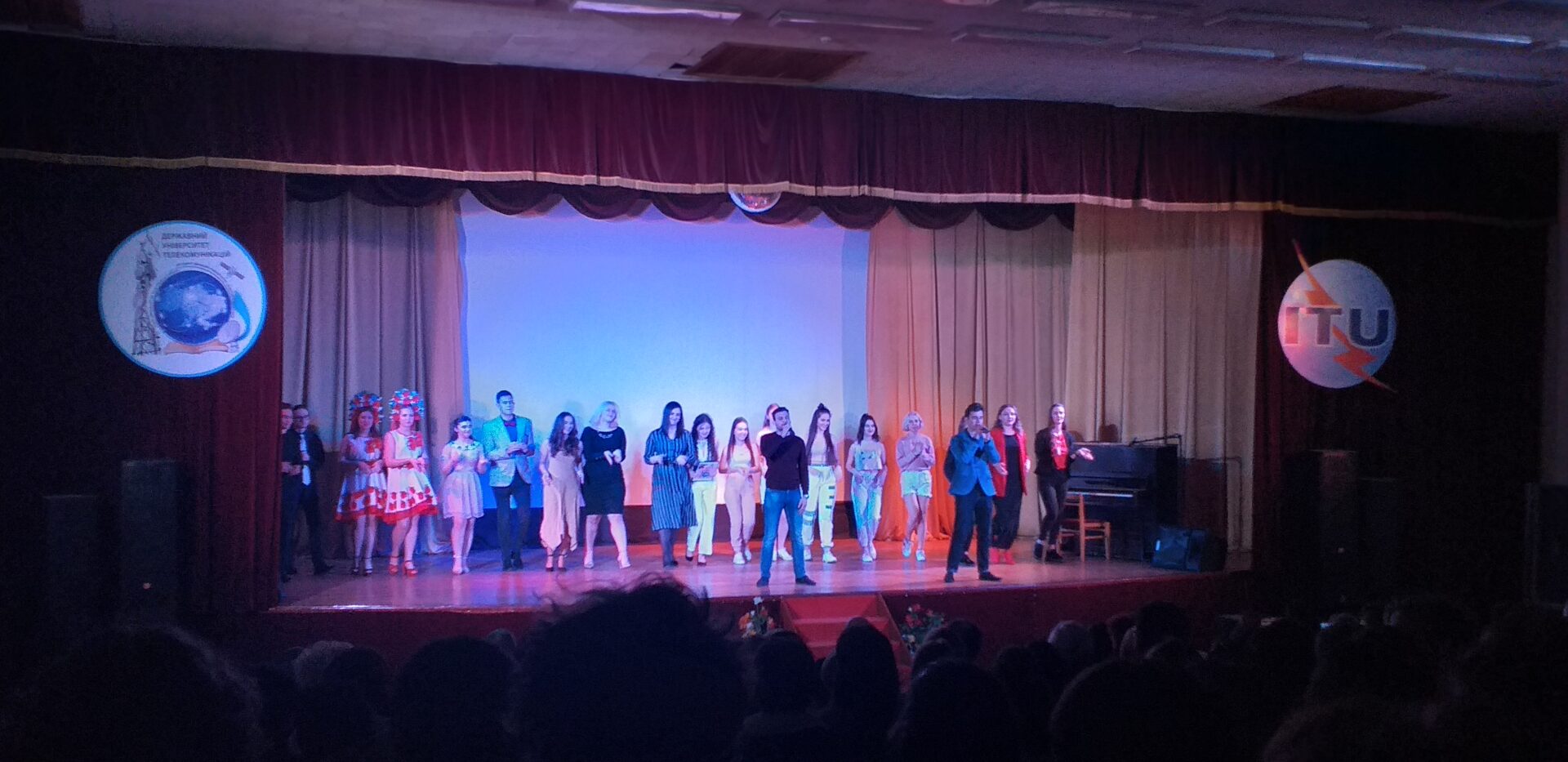
University events often reveal these asymmetries. Certain students become visible symbols of academic diversity, while others remain almost entirely outside these narratives.
At this point, the notion of the “hybrid profile” begins to show its limitations. It tends to flatten experiences that are actually shaped by unequal forms of visibility, recognition, and access to collective spaces.
What institutions produce without fully naming it
Universities develop language programs, support systems, and international academic structures. Yet an important part of the dynamics generated by these systems escapes institutional vocabulary.
What truly circulates within these environments is not limited to knowledge:
- social habits shift
- informal roles emerge
- cultural translation becomes necessary
- temporary intermediary positions stabilize over time
As a result, some students gradually occupy functions connecting multiple cultural environments, even though these functions are rarely institutionally acknowledged.
It is precisely within this gap between academic organization and social reality that a form of implicit cultural diplomacy takes shape.
Mediation as a situational consequence
University mobility does not automatically produce cultural mediators. Rather, it creates environments in which forms of mediation become necessary.
These mediations rarely appear in official narratives of internationalization. They emerge through ordinary situations — often fragile, frequently invisible, yet structurally significant over time.
In Eastern European universities hosting African and international students, these micro-adjustments contribute to the formation of lasting cultural relations extending well beyond the academic sphere itself.
—
📝 Article originally published on the historical platform Ciel-Bleu.org, then editorially revised and harmonized for Ciel Bleu Kultur.