
Learning beyond the academic framework
International higher education is often understood primarily as the transmission of academic knowledge. For international students, however, a significant part of learning takes place outside formal teaching structures.
In this sense, several technical universities, including those in Kyiv, illustrate that integration does not rely solely on academic programs. It also develops through everyday forms of social orientation within a new institutional and cultural environment.
This process is not limited to understanding academic content. It involves gradually navigating social practices, administrative routines, and implicit cultural codes.
Language as access to social space
The learning of the local language plays a central role in this process. However, its function quickly goes beyond academic requirements.
Language becomes a practical tool:
- for navigating administrative procedures
- for interpreting everyday interactions
- for moving within urban environments
- and for participating in social situations within the university
At this point, language ceases to be an abstract academic skill. It becomes a condition for social participation in everyday university life.
A pedagogy shaped through immersion
Teaching approaches in language departments often extend beyond traditional classroom instruction.
The learning process includes:
- visual materials
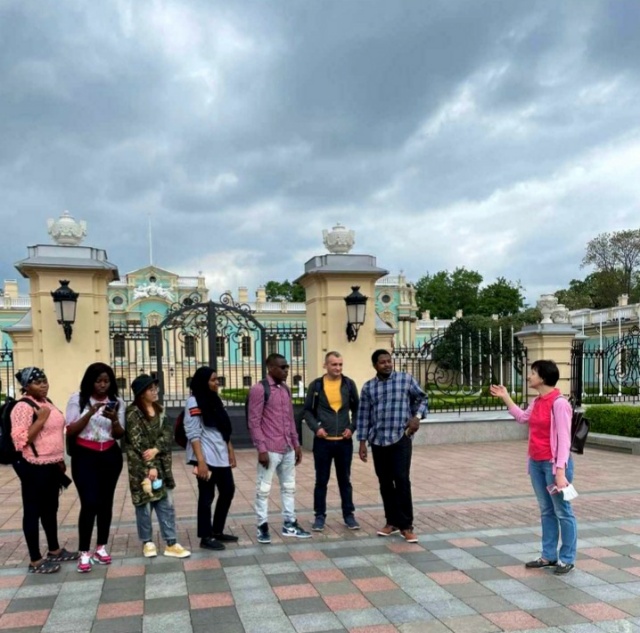
- field visits
- movement through the city
- and direct observation situations
This immersive structure gradually reshapes the function of learning itself. Students acquire not only linguistic skills, but also a sense of the environment they inhabit.
Urban infrastructures — metro stations, public spaces, administrative buildings, and cultural sites — become indirect learning spaces.
The city as a learning context
The urban environment becomes part of the educational process.
It no longer functions merely as a backdrop to university life, but as a structured space whose social and institutional logics must be gradually decoded.
This appropriation rarely happens suddenly. It develops through repetition:
- daily routes
- recurring situations
- small behavioral adjustments
These subtle processes enable a situated form of understanding.
Socialization as an uneven process
These forms of integration do not produce uniform experiences.
Some students quickly develop linguistic and social confidence. Others remain for longer periods in peripheral forms of participation, particularly when linguistic or cultural distance persists.
Socialization therefore does not follow a linear trajectory.
It emerges through continuous adjustments between:
- academic learning
- social orientation
- spatial navigation
- and access to collective university structures
This dynamic turns the university into a space of cultural transition.
Learning as a situated practice
The experiences of international students show that integration extends far beyond institutional programs.
Learning a language also means learning social rhythms, institutional practices, and local forms of coexistence.
In this sense, universities do not only transmit knowledge. They generate situations in which students gradually learn to operate within multiple cultural logics at the same time.
—
📝 Article originally published on the historical platform Ciel-Bleu.org, then editorially revised and harmonized for Ciel Bleu Kultur.